Record the system
A number without a system is incomplete. Save whether the listing uses US men's, US women's, UK or EU sizing, along with the exact model. When messaging a seller, ask for a label photograph if the system is unclear. This avoids building a purchase around an assumed conversion that the listing never actually stated.
Use the model's chart
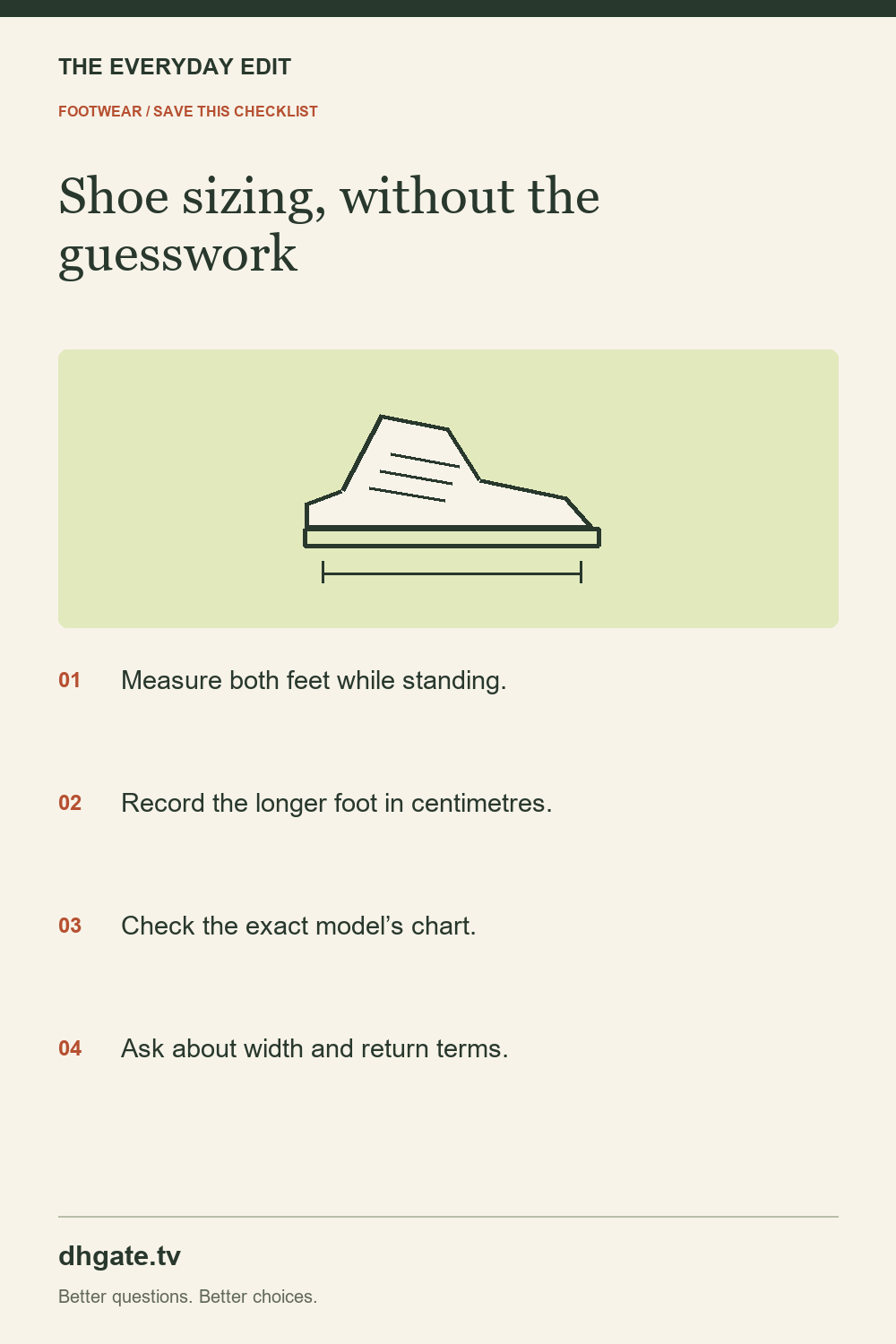
Open the relevant brand and category chart, such as adidas's men's footwear chart, rather than selecting the first conversion image in a search result. Keep units visible when making notes. If the chart uses foot length, do not substitute an insole measurement unless the manufacturer explicitly tells you to do so.
Make a comparison card
Create a short card containing the candidate model, chart size, stated size system and your existing pair's label. Add a note about the older pair's fit: roomy at the heel, short at the toes, or comfortable. This preserves the distinction between the printed number and the way a particular shoe feels on your feet.
Resolve ambiguity before paying
If two pages disagree, check that they refer to the same market, audience and product version. Send a focused question with the model reference and chart screenshot. Where fit remains uncertain, prefer a purchase with clear return conditions. A conversion narrows the search; the final decision still needs an assessment of the individual shoe.
Your buying checklist
- Write down the size system.
- Use the appropriate brand chart.
- Keep centimeters and inches distinct.
- Do not confuse foot and insole measurements.
- Resolve conflicting labels before ordering.
Further reading & references
Useful background and further reading.
Questions or a correction? Get in touch with the page link. Read our editorial policy.