Start with a reference pair
Choose a pair you already wear comfortably for the same purpose. Write down its model, labelled size and the socks you normally use. This gives you a useful comparison when a seller describes a new pair as narrow, roomy or true to size. A size number on its own leaves too much open to interpretation.
Measure both feet
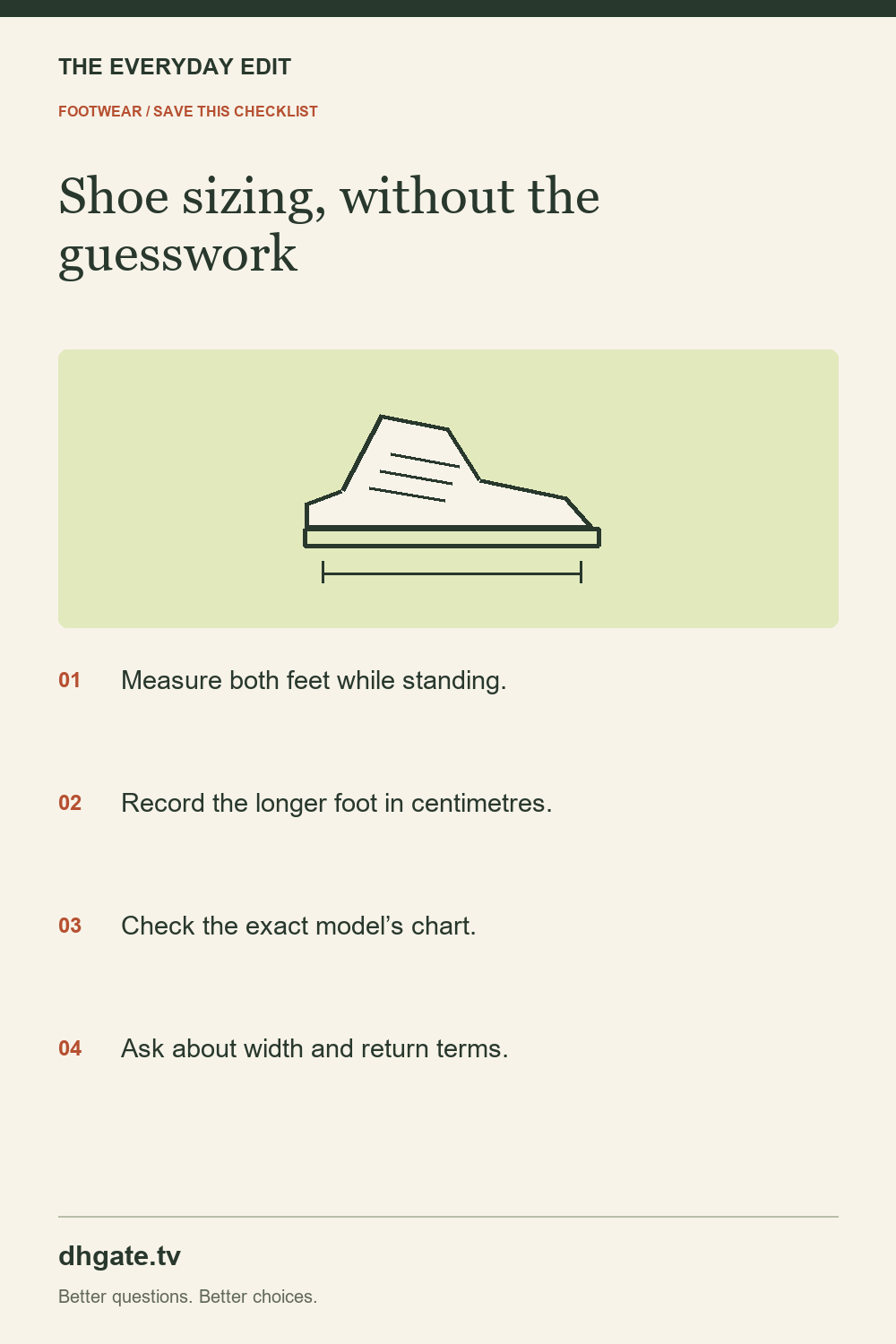
Stand on a sheet of paper and mark the heel and longest toe. Measure the distance in centimetres for each foot and record the larger measurement. Ask whether the seller’s chart describes foot length, insole length or outsole length. Those are different measurements; do not substitute one for another. Avoid adding a fixed allowance without checking the intended fit.
Ask about the shape
Length does not tell you everything. Ask about forefoot width, toe-box shape and heel hold. Mention if you normally need a wide fit or wear an orthotic. For boots, ask about the opening and shaft measurements as well. A clear reply about the actual model is more useful than a generic conversion chart.
Plan for a fit that does not work
Before ordering, find out whether trying the shoes on indoors affects return eligibility. Keep the packaging and avoid outdoor wear until you decide to keep them. These are suggested buying checks, not a promise that a particular size will fit. Consult a qualified professional for persistent foot pain or specialist fitting needs.
Your buying checklist
- Foot length for both feet
- Chart measurement type and units
- Width and intended socks
- Return deadline and return postage
Further reading & references
Useful background and further reading.
Questions or a correction? Get in touch with the page link. Read our editorial policy.