Separate material from appearance
Request the stated materials for the upper, lining and sole. In the EU, footwear labels identify materials for the upper, lining and sock, and outer sole. A material label tells you about composition; it does not establish a product’s brand authenticity or predict how comfortable it will feel.
Request useful angles
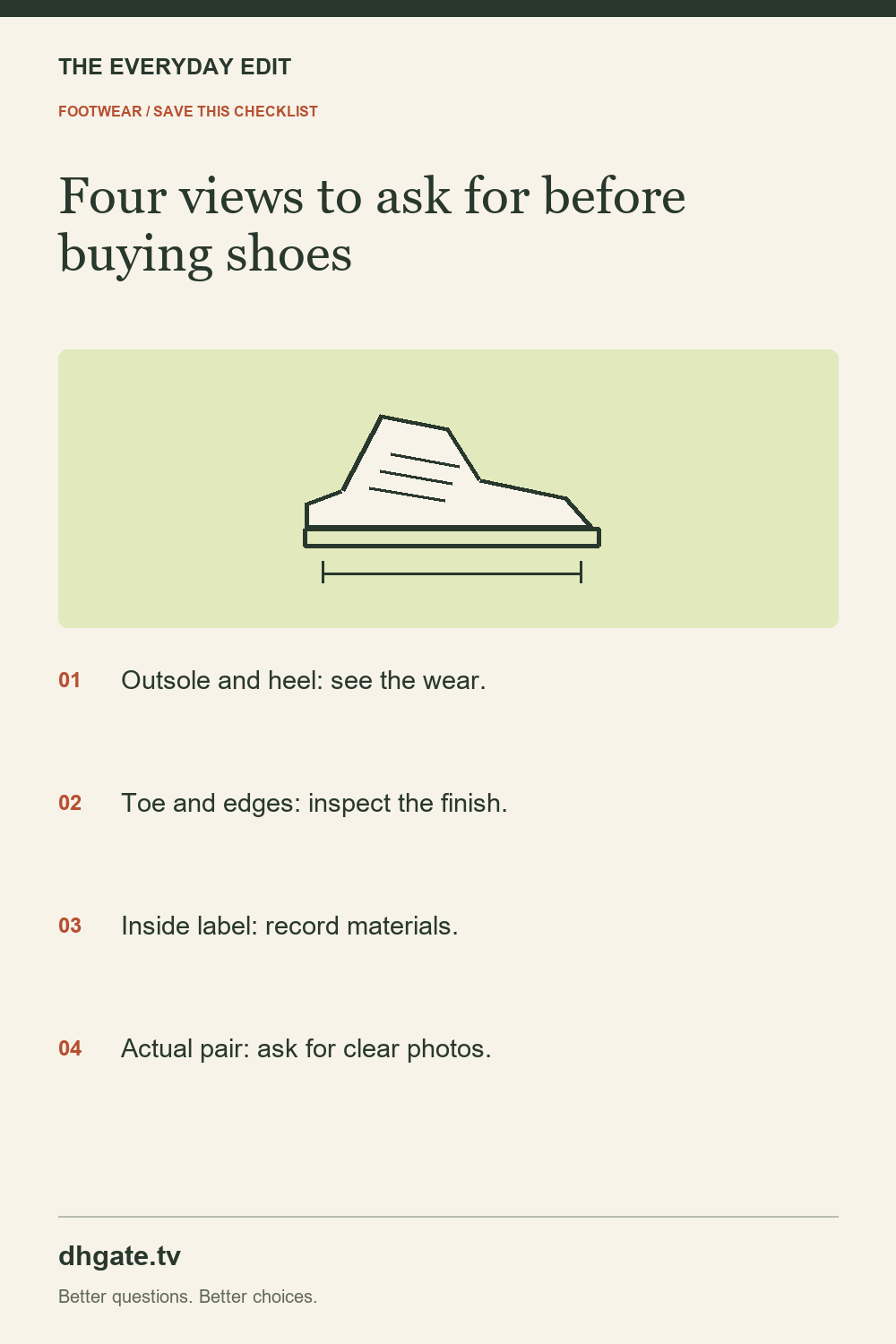
Ask for a side view, outsole, heel, inside label and a close-up of the toe and sole edge. For a used pair, request the actual item rather than a representative stock image. Look for areas that deserve a follow-up question: gaps, loose threads, uneven edges or visible wear. Photographs can hide depth, stiffness and small defects.
Make the inspection match the purpose
For daily walking, ask about weight and flexibility. For wet-weather use, ask what water-resistance claim the manufacturer actually makes and which care instructions apply. For sport, check the stated intended activity. A fashionable silhouette or an expensive-looking finish does not establish suitability for training or protective use.
Keep quality and authenticity separate
A neatly made shoe can still have an unverified origin. An uneven stitch alone cannot prove a shoe is counterfeit. If brand authenticity matters, request traceable purchase documentation and use the brand’s support or an appropriately qualified authentication service. Do not treat this visual checklist as a certificate.
Your buying checklist
- Upper, lining and sole materials
- Actual-item detail photos
- Intended use and care instructions
- Evidence for any brand-origin claim
Further reading & references
Useful background and further reading.
Questions or a correction? Get in touch with the page link. Read our editorial policy.