Locate the tight spot
Put on both shoes with the socks you intend to wear. Notice whether contact is at the longest toe, across the forefoot, over the instep or around the heel. Write down the location rather than simply calling the shoe small. A shoe can have adequate length and still feel restrictive across the front.
Compare width with toe shape
Nike distinguishes overall wide fitting from a roomy toe box: they address different parts of the fit. Check whether the exact model and color are sold in a wide version. Do not assume every shoe in a familiar collection shares the same shape, or that a larger number guarantees the space you need.
Change one variable
If the front feels tight but the heel is already loose, compare a wider option before moving farther up in length. Keep socks and lacing consistent while comparing. Photograph the size labels and record which shoe holds the heel better; this makes a second try-on more useful than relying on memory.
Make an indoor decision
Walk, turn and pause on a clean indoor surface while keeping the return conditions in mind. Try both feet, since their fit may differ. If one pair only feels acceptable when the laces are extremely loose, compare another shape. Choose the shoe that fits your whole foot, rather than the one that looks widest online.
Your buying checklist
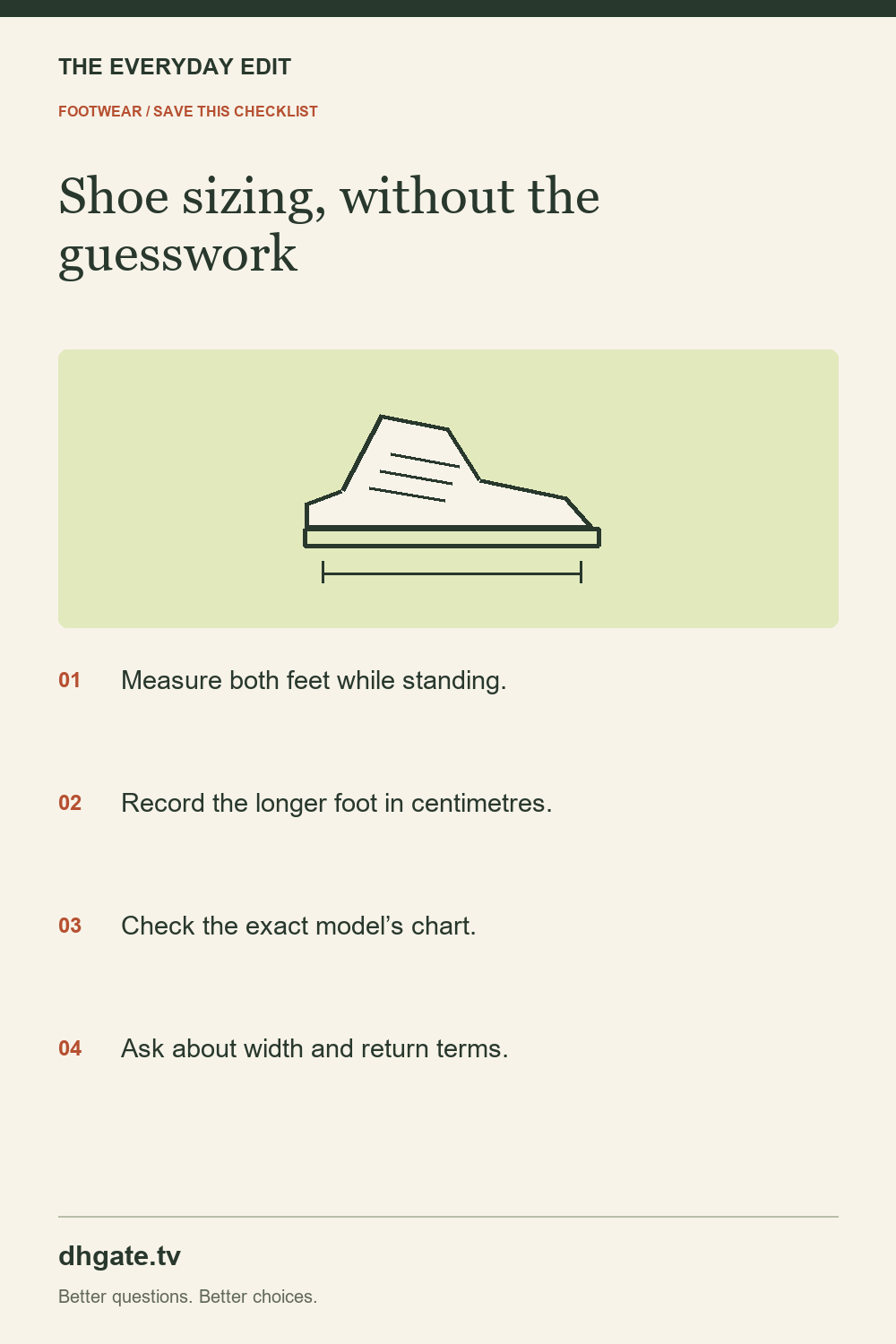
- Identify where the pressure occurs.
- Check the exact width option.
- Use the same socks for comparisons.
- Compare heel security as well as toe room.
- Keep the shoes returnable during the fit check.
Further reading & references
Useful background and further reading.
Questions or a correction? Get in touch with the page link. Read our editorial policy.