Collect words you actually like
Start with descriptions of fragrances you already enjoy. Circle repeated words such as floral, woody, citrus, or vanilla, then add your own plain-language impressions. Keep the exact product names beside them. These terms are a browsing aid, not a personal compatibility score. Two fragrances sharing a word can still lead you toward different preferences when you try them.
Read the product's identity first
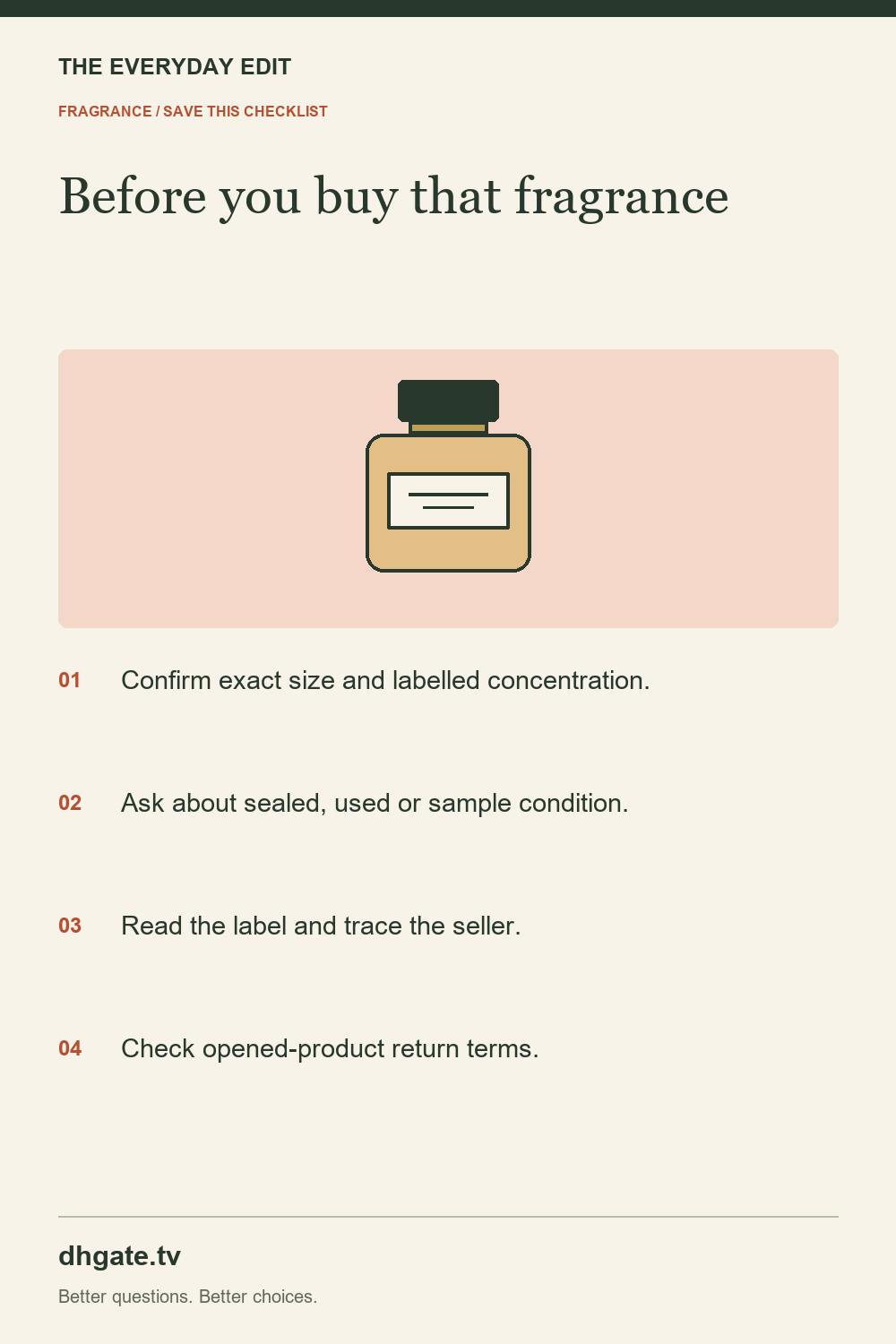
Before comparing note descriptions, confirm the full name and concentration. Dior lists distinct fragrance expressions and formats, so two related names may describe separate choices. Compare the official description for each exact product rather than borrowing a description from another version. Record one reason to sample it and one question you want the sampling experience to answer.
Make a balanced small shortlist
Select a few candidates that answer different questions: one near a known favorite, one with a contrasting direction, and one curiosity. This is more informative than choosing several nearly identical descriptions at once. For example, you might compare a floral direction with a woody one while keeping a familiar fragrance as your reference point. Let your own preferences determine the result.
Write impressions in usable language
After trying a candidate as directed, note what you enjoyed, what you disliked, and when you would choose it. Avoid reducing the decision to a copied list of notes. A comment such as 'I would wear this to dinner but prefer my usual option for work' is more useful for your next purchase than repeating advertising adjectives from the product page.
Your buying checklist
- Record exact product names
- Circle recurring preferences
- Choose contrasting candidates
- Write a question for each sample
- Keep your own decision notes
Further reading & references
Useful background and further reading.
Questions or a correction? Get in touch with the page link. Read our editorial policy.