Make the comparison manageable
Start with a small shortlist and record each sample’s exact labelled name. Decide what you are looking for: a lighter everyday scent, a gift or something for a particular setting. Treat these as personal preferences rather than objective quality grades.
Use a repeatable note sheet
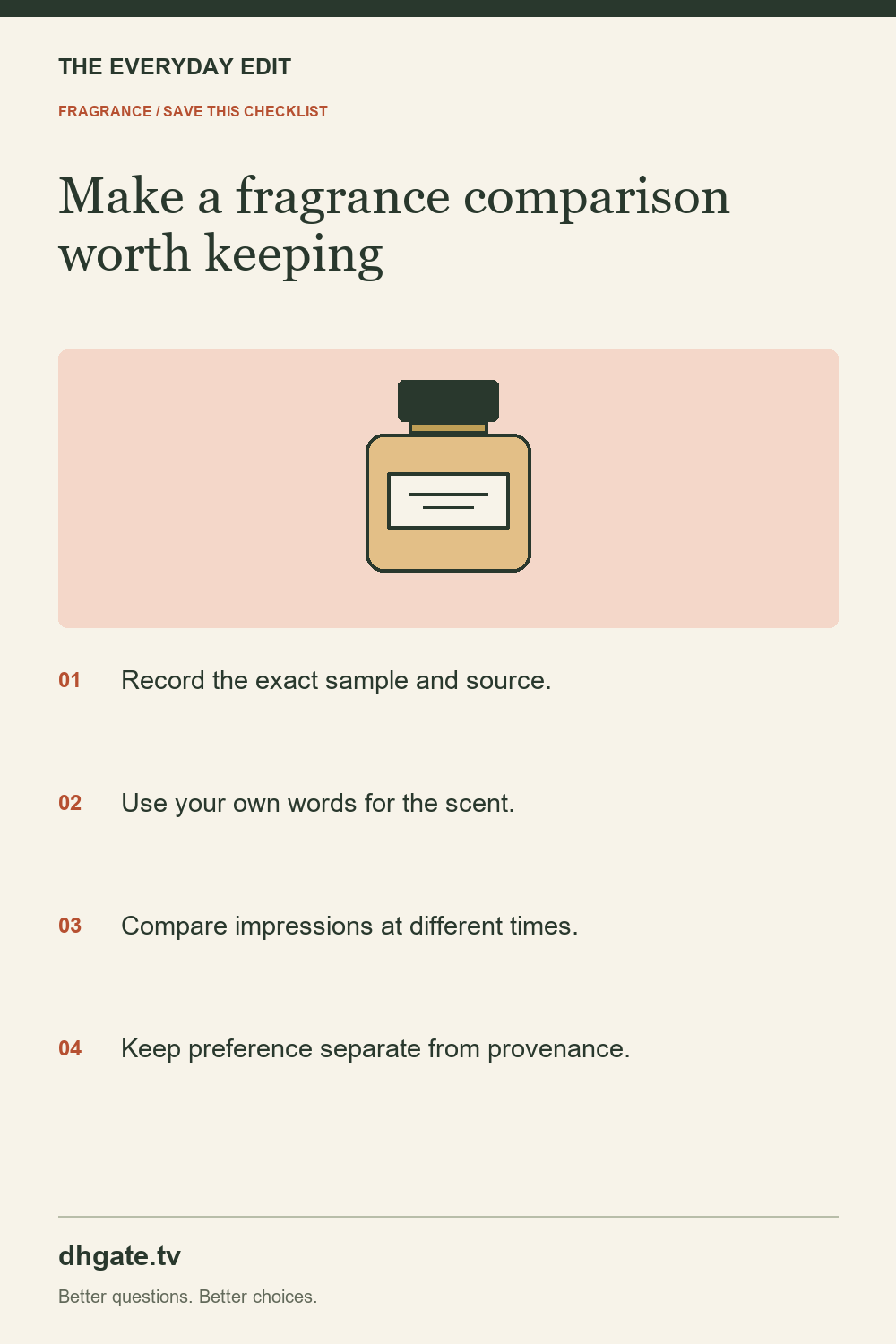
Write down the date, sample source, labelled product and your impression at different times. Keep application and surroundings reasonably consistent when comparing. Describe what you notice in your own words instead of repeating a brand’s entire scent story. Do not assume one person’s experience predicts yours.
Respect ingredient concerns
FDA guidance notes that some people are sensitive or allergic to fragrance ingredients. Natural or familiar-smelling does not establish suitability for you. Follow the product instructions, and ask the manufacturer or a qualified clinician about a known sensitivity. A casual sampling exercise is not a medical allergy test.
Keep preference separate from provenance
A scent you enjoy is not proof of its origin. A scent that seems different is not enough on its own to establish counterfeiting. If the source is uncertain, investigate the seller and documentation rather than attempting to prove authenticity through smell, colour or a home experiment. Keep any final review clear about what you actually observed.
Your buying checklist
- Sample identity and source recorded
- Personal impressions distinguished from facts
- Product instructions followed
- No authenticity conclusion from scent alone
Further reading & references
Useful background and further reading.
Questions or a correction? Get in touch with the page link. Read our editorial policy.