Choose the right reference
UNIQLO distinguishes body measurements from the dimensions of a finished garment. Use its body-size guidance when comparing your own measurements, and its product measurements when comparing a similar item you own. Keep those two sets of numbers in separate notes. A chest circumference and a flat shirt width are not the same type of measurement.
Pick a useful comparison garment
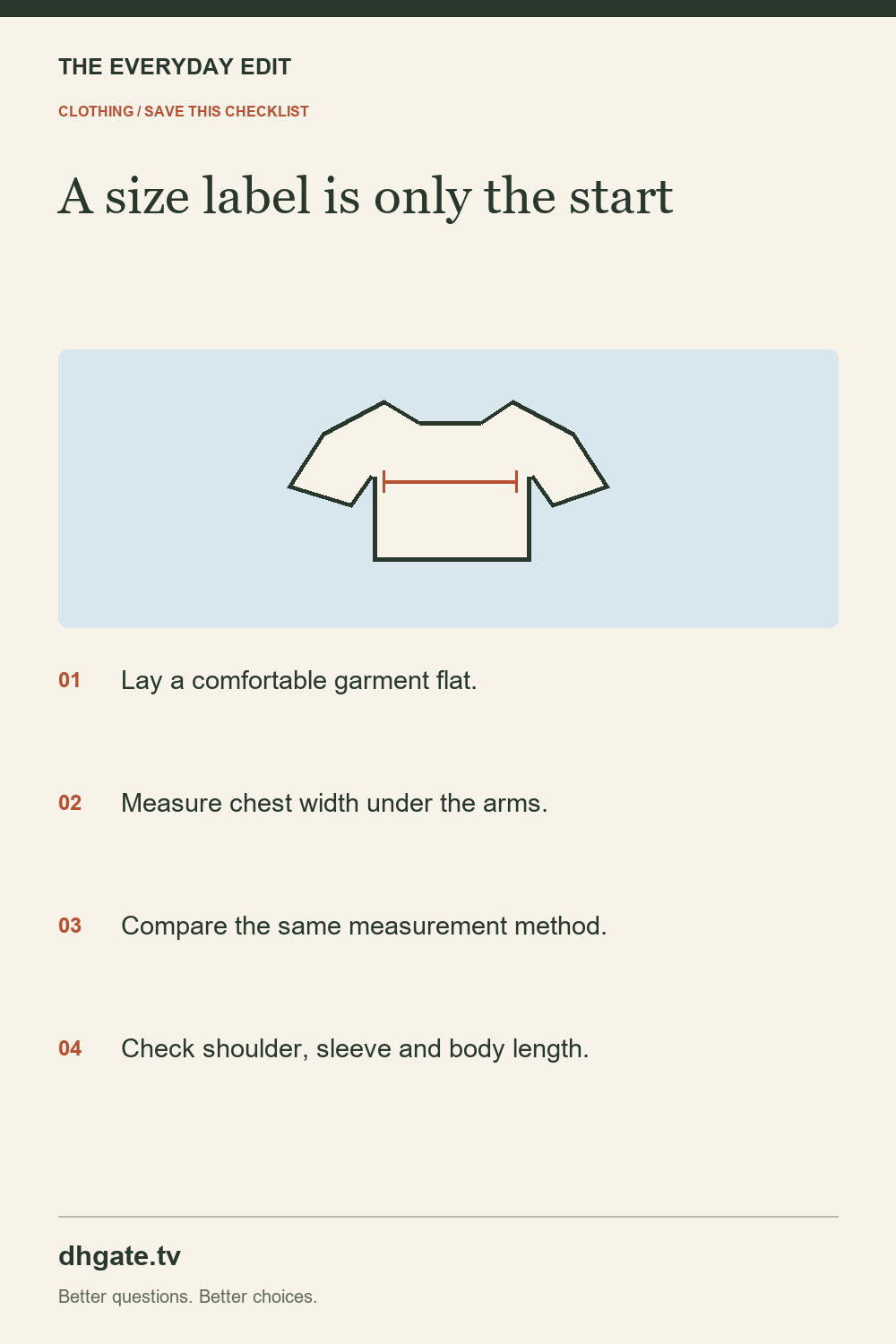
Choose a piece that fits the way you want the new item to fit. Compare a casual shirt with a similar casual shirt rather than a fitted stretch top. Lay it flat without pulling. Record the measurement method too, so a shoulder-based sleeve measurement is not accidentally compared with one taken from the center back.
Read the exact product chart
Open the chart attached to the particular item and market you intend to order from. UNIQLO notes that product measurements vary with design, fit and fabric. Save the product reference with your notes. An oversized tee and a regular tee sharing a size letter should not be expected to have identical finished dimensions.
Decide where the difference matters
Compare the dimensions that affect your intended use: body length for tucking, chest width for layering, or sleeve length under a jacket. If you prefer a shorter hem but the right width, ask whether an alteration is realistic before sizing down. Make the decision around a visible difference rather than the size letter alone.
Your buying checklist
- Separate body and garment measurements.
- Choose a similar reference garment.
- Match the measuring method.
- Use the exact item's size chart.
- Save the product code and market.
Further reading & references
Useful background and further reading.
Questions or a correction? Get in touch with the page link. Read our editorial policy.