Measure the garment, not just yourself
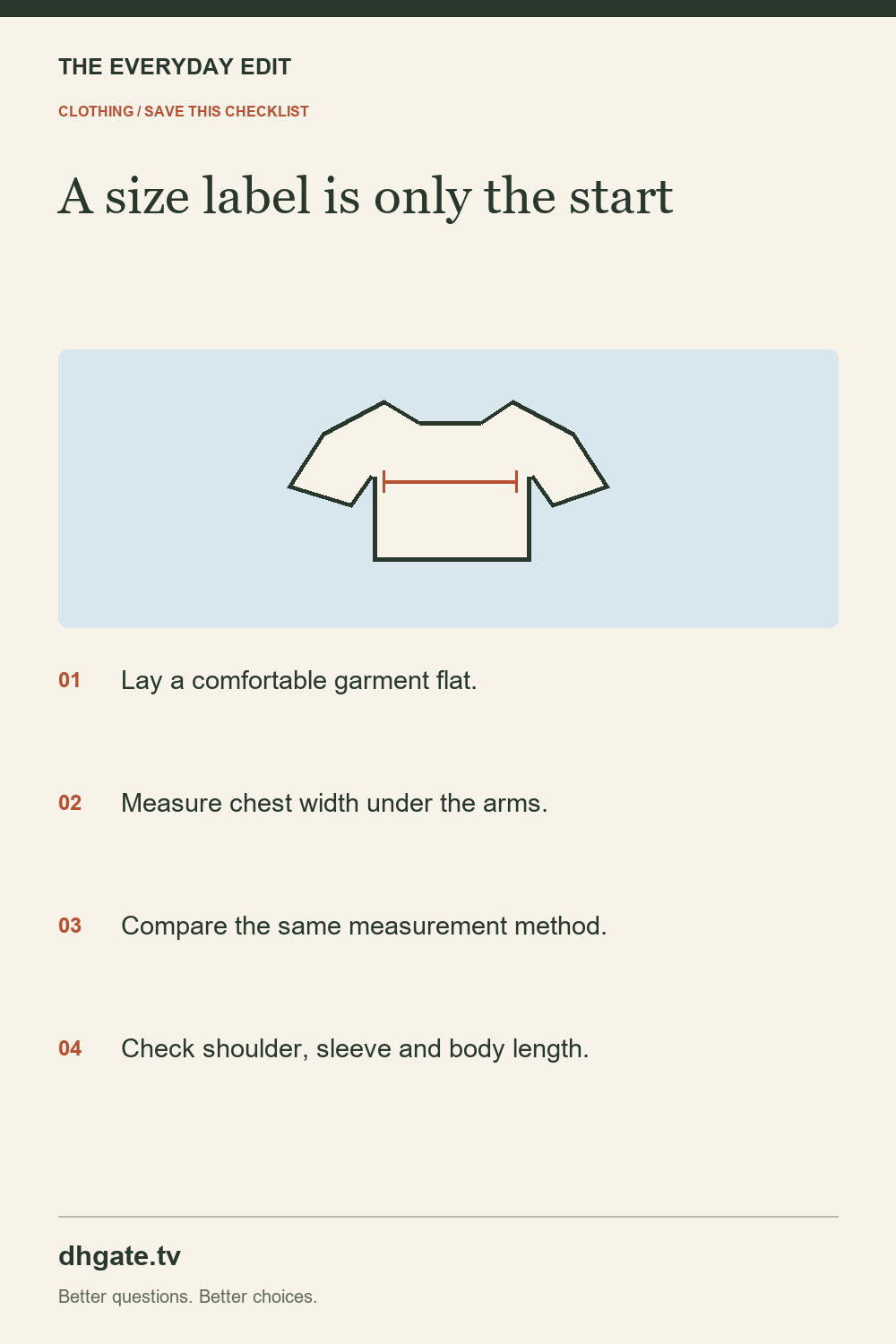
Lay a similar garment flat without stretching it. Record chest width from underarm to underarm, shoulder width, body length and sleeve length. For trousers, record the waistband, rise, inseam and thigh width. Tell the seller which measurement method you used so you can compare like with like.
Clarify flat width and circumference
A chart may list a flat width or a full circumference. Ask which one it uses. A flat chest width of 50 cm is not a 50 cm body circumference. Keep units consistent and ask about measurement tolerance. For elasticated waistbands, request the relaxed measurement and the seller’s recommended fit range.
Consider the intended silhouette
Decide whether you want a close, regular or loose fit before choosing a size. Compare measurements with a garment that already has that silhouette. A bigger label size can change the shoulders and sleeve length as well as the chest, so sizing up may not produce the shape you expect.
Ask how care affects the choice
Request the fibre composition and care-label photo. EU textile labelling rules require fibre-composition information for products covered by those rules. This information is useful context, but it does not tell you the exact shrinkage or fit of an individual garment. Ask the seller about the specific item rather than assuming all garments of one fibre behave alike.
Your buying checklist
- Comparable garment measured flat
- Units and measurement method
- Relaxed versus stretched measurements
- Composition, care and return terms
Further reading & references
Useful background and further reading.
Questions or a correction? Get in touch with the page link. Read our editorial policy.