Observe the existing rotation
Look at what the recipient chooses repeatedly: delicate or substantial designs, short or long chains, and the colors they combine. Ask about preferences when possible instead of treating one special-event photograph as their everyday style. Write a three-line brief covering the type of item, approximate scale, and intended occasion. This narrows the choice without guessing their entire wardrobe.
Separate appearance from composition
Gold-colored, gold-plated, and gold items should not be treated as interchangeable descriptions. Request the actual material specification and retain it with the order. The FTC emphasizes accurate information about jewelry composition. If the wearer has particular material requirements, ask them directly and obtain suitable confirmation; color, price, and a decorative stamp cannot answer every material question.
Choose a manageable fitting problem
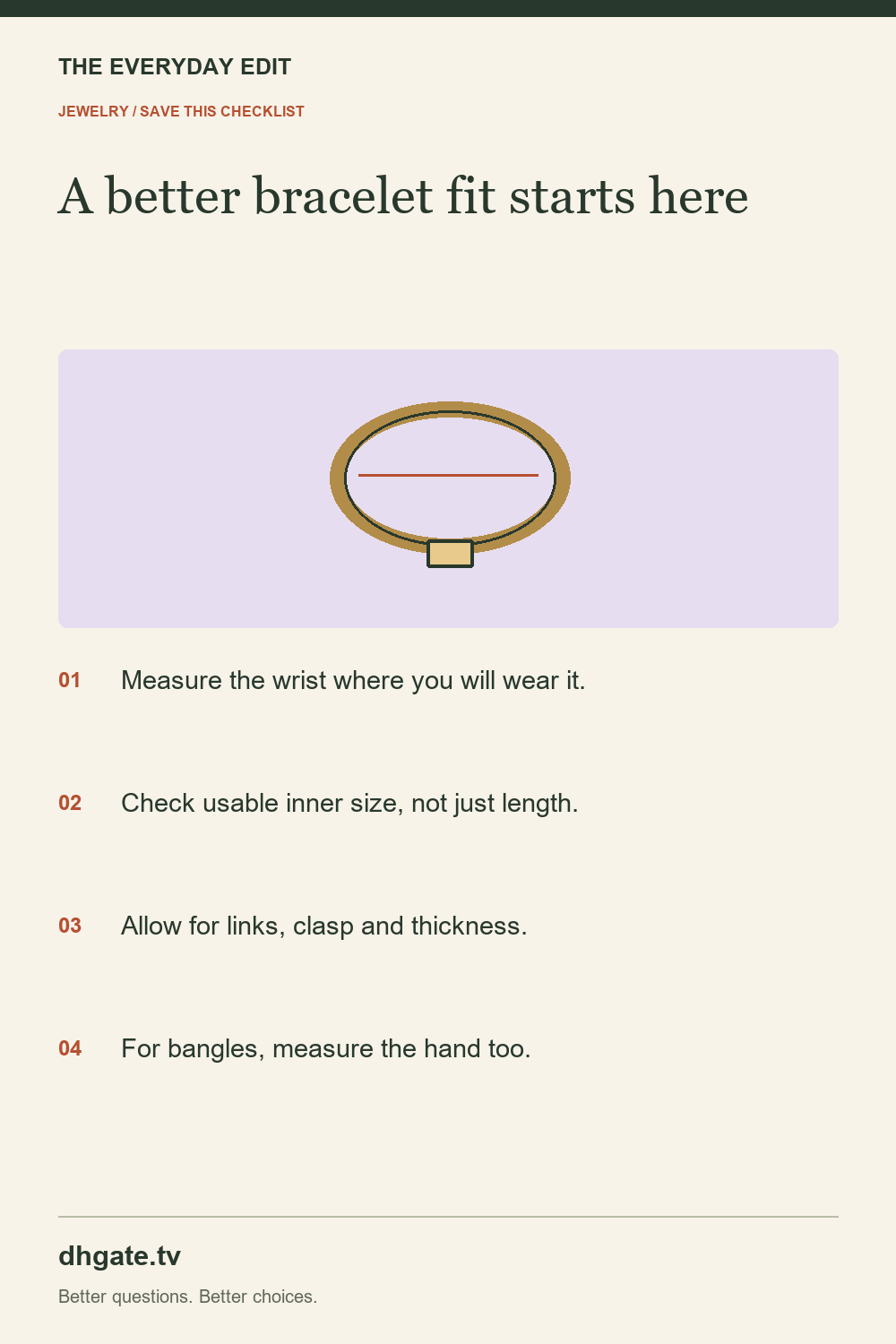
A bracelet needs a relevant fit guide, while a ring needs the intended finger and sizing system. An adjustable product still has a usable adjustment range, so ask for that range rather than assuming it fits everyone. For a surprise, prioritize a clear exchange route. Check whether engraving, pierced items, or other choices change the seller's return conditions.
Prepare the handover
Include the item details, care instructions, and a gift receipt where available. Keep private payment information separate. Explain any adjustment mechanism so the recipient does not need to pull at an unfamiliar part. A useful gift package lets the wearer understand the piece and arrange an exchange if necessary, without needing to reconstruct the original product listing themselves.
Your buying checklist
- Write a short style brief
- Confirm actual materials
- Check size or adjustment range
- Read exchange conditions
- Include useful care details
Further reading & references
Useful background and further reading.
Questions or a correction? Get in touch with the page link. Read our editorial policy.