Start with what must fit
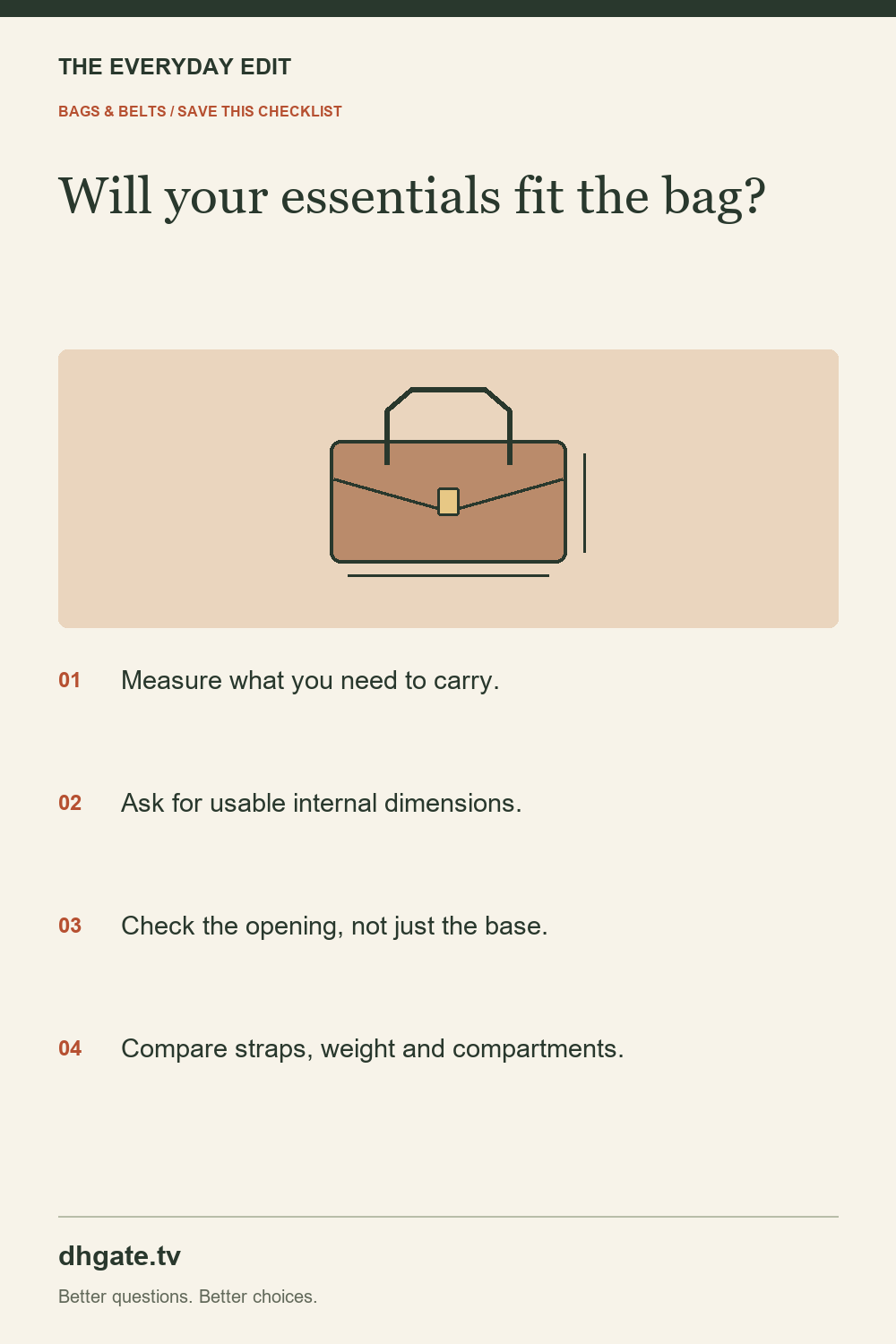
List the things you carry and their measurements. Request the bag’s internal dimensions, opening width and compartment layout. External dimensions can include padding, handles or curved sections. If you need to carry a laptop, compare the actual device dimensions with the usable compartment rather than relying only on a screen-size description.
Ask about every material
Request separate descriptions of the exterior, lining, straps and trim. A leather-looking surface is not enough to identify composition. The FTC’s Leather Guides address misleading material descriptions, including non-leather materials that resemble leather. Ask the seller to clarify an ambiguous description in writing.
Look at stress points
Useful close-ups include strap attachments, handle bases, corners, lining seams, zip ends and the underside of hardware. Ask whether straps are detachable or adjustable and whether hardware can be replaced. These checks help you understand the design; they do not establish a tested load capacity.
Consider everyday handling
Think through opening the bag with one hand, finding a phone and carrying it over a coat. Ask for the strap’s adjustment range and the bag’s empty weight. For used bags, request disclosure of repairs, odour and lining damage. A material or construction assessment is separate from any claim about brand authenticity.
Your buying checklist
- Usable internal dimensions
- Exterior, trim and lining materials
- Handle and strap detail photos
- Weight, condition and repair disclosures
Further reading & references
Useful background and further reading.
Questions or a correction? Get in touch with the page link. Read our editorial policy.