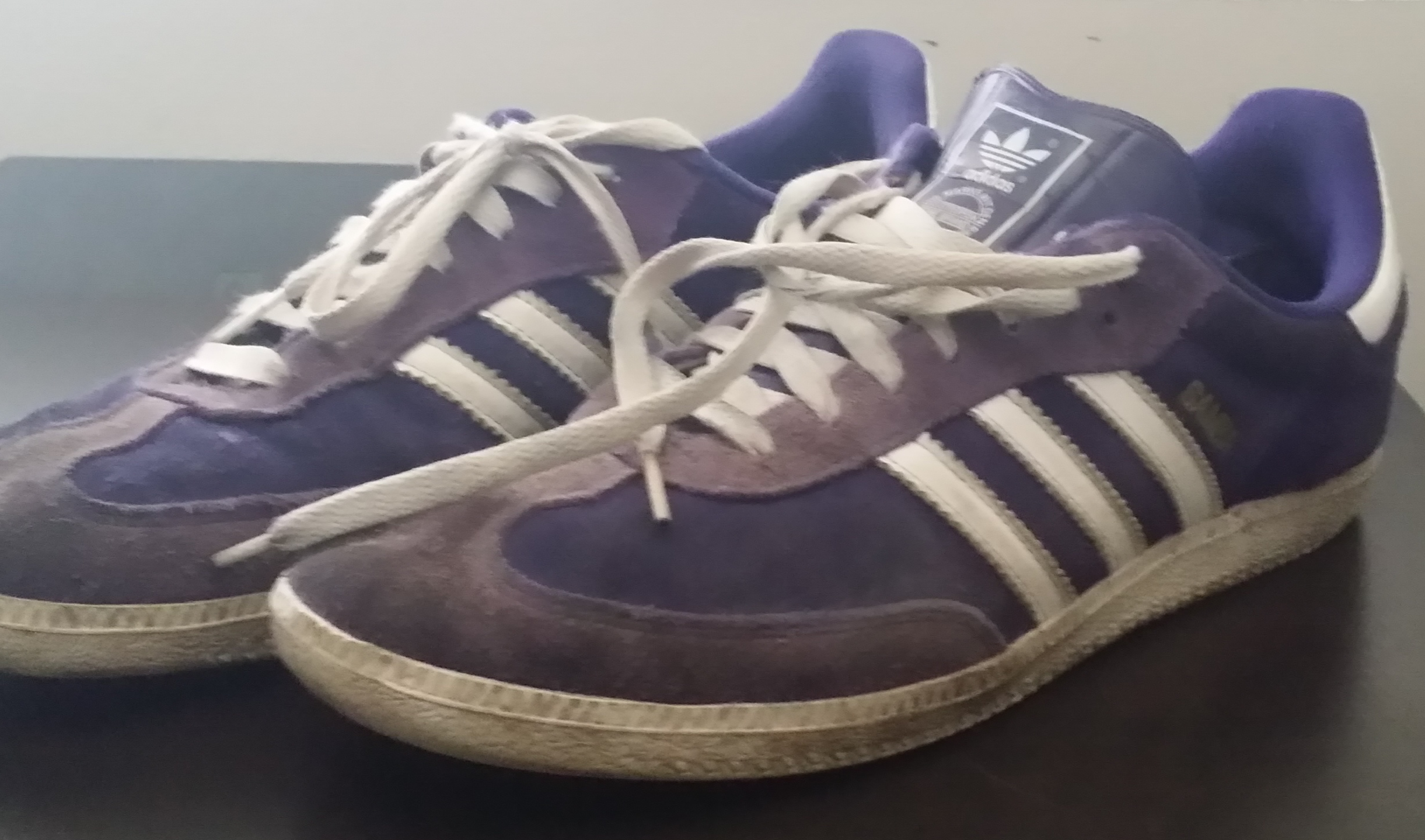
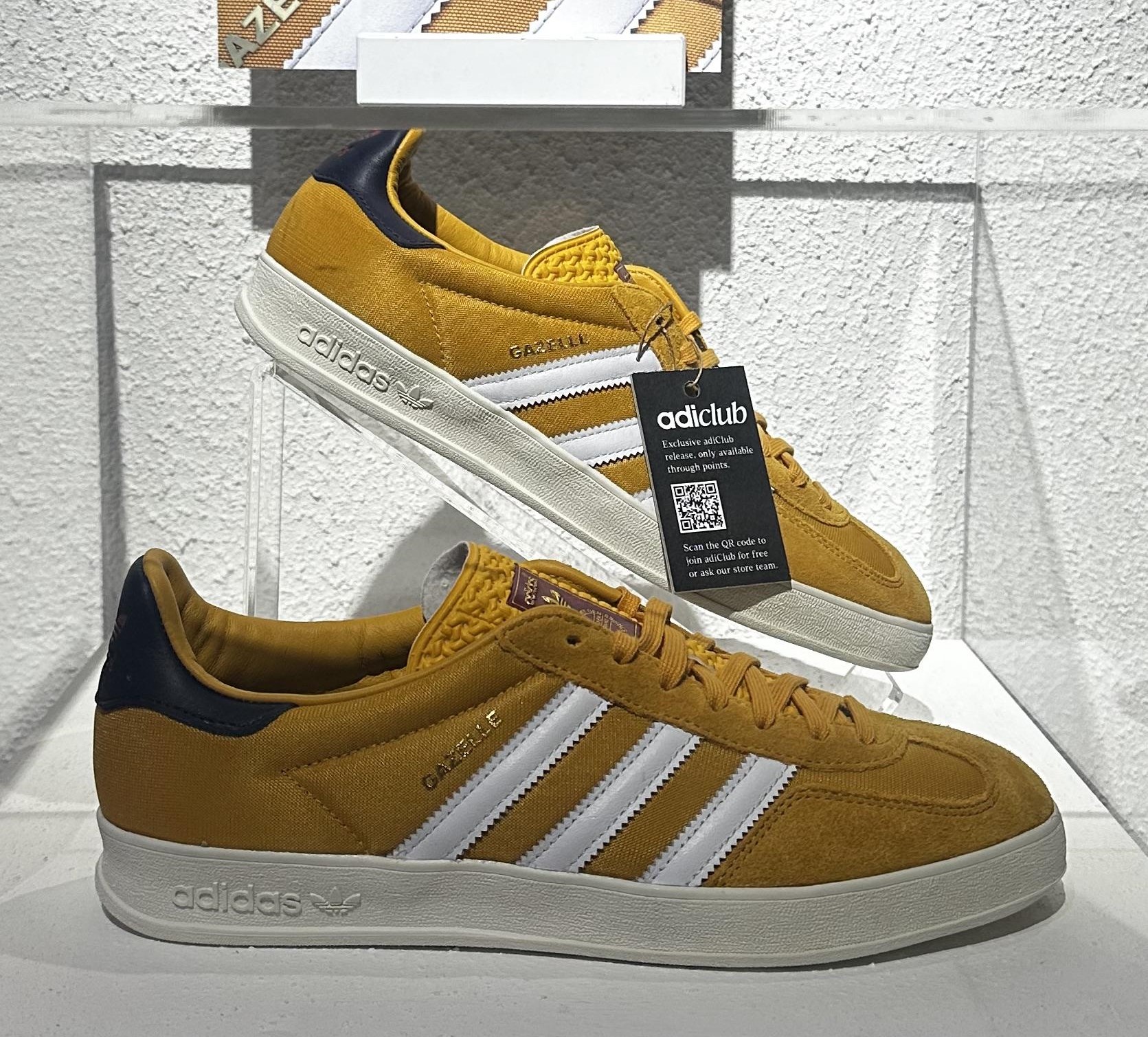


Separate the model from the edition
A plain Gazelle, Gazelle Indoor and Gazelle Bold should not share one set of specifications in your notes. The same applies when a Samba listing adds a different edition name. Copy the complete name, product code and size system into two columns before comparing photographs. A change of colour can also bring a change of material. Keep each specification attached to its own reference.
Compare photographs in the same order
Open a side view of each candidate at a similar scale. Then compare the toe from above, the heel and the outsole. Look at the outline and placement of panels rather than judging from lighting or the saturation of the stripes. Request these views of the actual pair if the listing is secondhand. A close-up that shows only one decorative detail leaves the condition of the rest of the shoe unanswered.
Read material wording carefully
The linked regional product pages do not use identical colour and material wording. That makes the product code, the seller’s specification and the label more useful together than a broad claim that one entire family is “leather” and the other is “suede.” For your chosen pair, record the upper, lining and outsole separately. Ask for clarification when a title and a specification disagree; do not resolve that disagreement by borrowing text from another colourway.
Choose by the pressure point, not the popularity
Use the same socks and a similar lacing tension when trying the two pairs. Note toe clearance, pressure across the forefoot and heel movement as separate observations. General usual-size guidance is a starting point, not a promise about your foot. If a larger size relieves pressure but introduces heel slip, record both outcomes rather than calling the fit fixed. Keep the return conditions visible until that decision is settled.
Make a useful final choice
Shortlist the exact version whose appearance, materials and fit suit your use. If you want a particular upper texture, make that a required field. If your priority is comfort during a full day, an indoor try-on and a practical return route matter more than a ranking based on photos. Save the complete reference so that a later restock search does not silently switch you to another version.
Your comparison checklist
- Full model name and product code saved
- Same size system compared
- Side, toe, heel and outsole views checked
- Upper and lining confirmed for the chosen colour
- Toe room, forefoot pressure and heel movement recorded
Product references
- adidas US: Samba OG B75806 ↗
- adidas Bahrain: B75806 material details ↗
- adidas US: Gazelle BB5476 ↗
- adidas Ireland: BB5476 material details ↗
Product information checked 15 October 2026. Exact reference pages control specifications; options may change.